
web2project 5.0.0 is out. It was released on 23 November 2026 and is the first major release since 4.0.2 in March 2026. It replaces the three release candidates (rc1 to rc3), which are now deprecated.
There are two headline changes: a new interface, and a long list of security fixes that make the permission model apply everywhere it should. Every feature in it is still free for every user, under the Clear BSD licence, on your own servers.
What’s new
- A new interface built on Bootstrap 5.3, with every script, stylesheet and font bundled locally, redesigned sign-in pages and a print stylesheet.
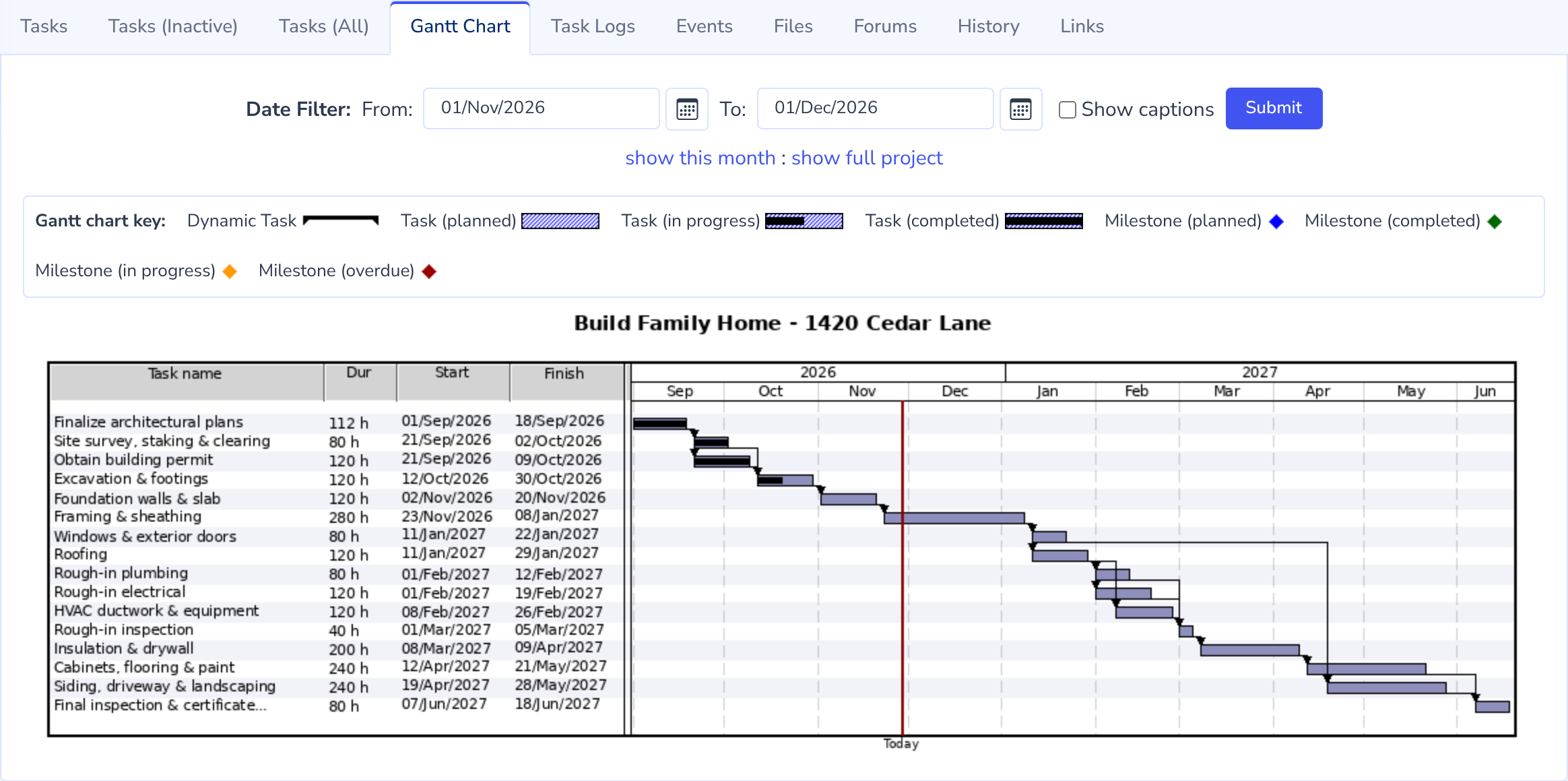
- Projects have a combined All Tasks tab, inactive tasks are styled as inactive, and budgets are shown on the project again.
- Files have a Folders tab, a folder field on the upload form, and Owner and Category filters.
- Calendars shade non-working days, and the header search box runs SmartSearch across every module.
- Public sign-up has bot protection that doesn’t rely on a third-party captcha, and lost-password recovery is back.
- Custom fields now work for users and calendar events.
- The installer checks for the PHP extensions it needs and warns you about upload settings before you start.
Security
5.0 closes several security advisories. If you run web2project anywhere other people can reach it, this is the reason to upgrade.
- Every request that changes data needs a form token, so CSRF protection covers the whole application, add-on modules included.
- Task, file, link, forum and task-log permissions are enforced everywhere. A task’s Access setting (Public, Protected, Participant or Private) now applies in every list, search, calendar, report and Gantt chart.
- Role changes, account saves and sign-up are checked against permissions, so users can’t promote themselves.
- Search input is escaped in SQL LIKE clauses, several cross-site scripting issues are fixed, and project colours must be hex codes.
- Session handling, cookies and password checks are hardened, and calendar feeds use random tokens.
- Translation files are parsed as data instead of being executed.
- Module pages and handlers load only when the module is active and the user is allowed to use it.
Before you upgrade
- PHP 8.3 is now the minimum. Use MySQL 8 or MariaDB 10.x.
- Back up first: dump the database, and copy the files folder and config.php.
- After copying in the new release, run
composer install --no-dev. Carbon moves to 3.x and a compatibility package has been removed. - In System Admin, Apply System Updates runs migrations 063 to 078 and stops at the first statement that fails. Migration 077 renames duplicate login names, and 078 resets invalid project colours.
- Bootstrap 5.3 is the only theme. The two older themes and theme selection have been removed.
- Deprecated functions and class aliases, PDF output, file check-in and check-out, file versions, file email notifications and contact self-update have been removed. Add-on modules that use any of them will stop working until they’re updated.
The upgrade guide walks through the steps, and Upgrading modules to 5.0 covers what add-on authors need to change.
Known issues
- Uploaded files are stored inside the web root. Add a web server rule that blocks direct access to the files folder; the security notes explain how.
- The update check is on by default and uses plain HTTP. It sends only software and environment versions. Switch it off in System Admin if your network policy forbids outbound calls.
- Sites converted from dotProject may be missing some module rows and column types.
- A refused save can show an empty error message.
- Add-on modules can’t yet ship templates that the template resolver finds.
- The Project Importer add-on (Microsoft Project XML) is still being updated for 5.0, so test imports before relying on them.
By the numbers
597 unit tests pass, with 120 skipped or incomplete. The codebase is about 67,000 lines across 149 classes, and it now ships with a PHPStan level 10 configuration.
Why it matters
5.0 is the version to evaluate web2project on. It includes the client separation that keeps each client’s work apart, the dependencies, allocation and budgets other tools charge extra for, and an access model your security team can read. It all runs on a PHP and MySQL stack you already know.
Get help
Start with the documentation. Ask questions in GitHub Discussions, and report bugs in GitHub issues.